
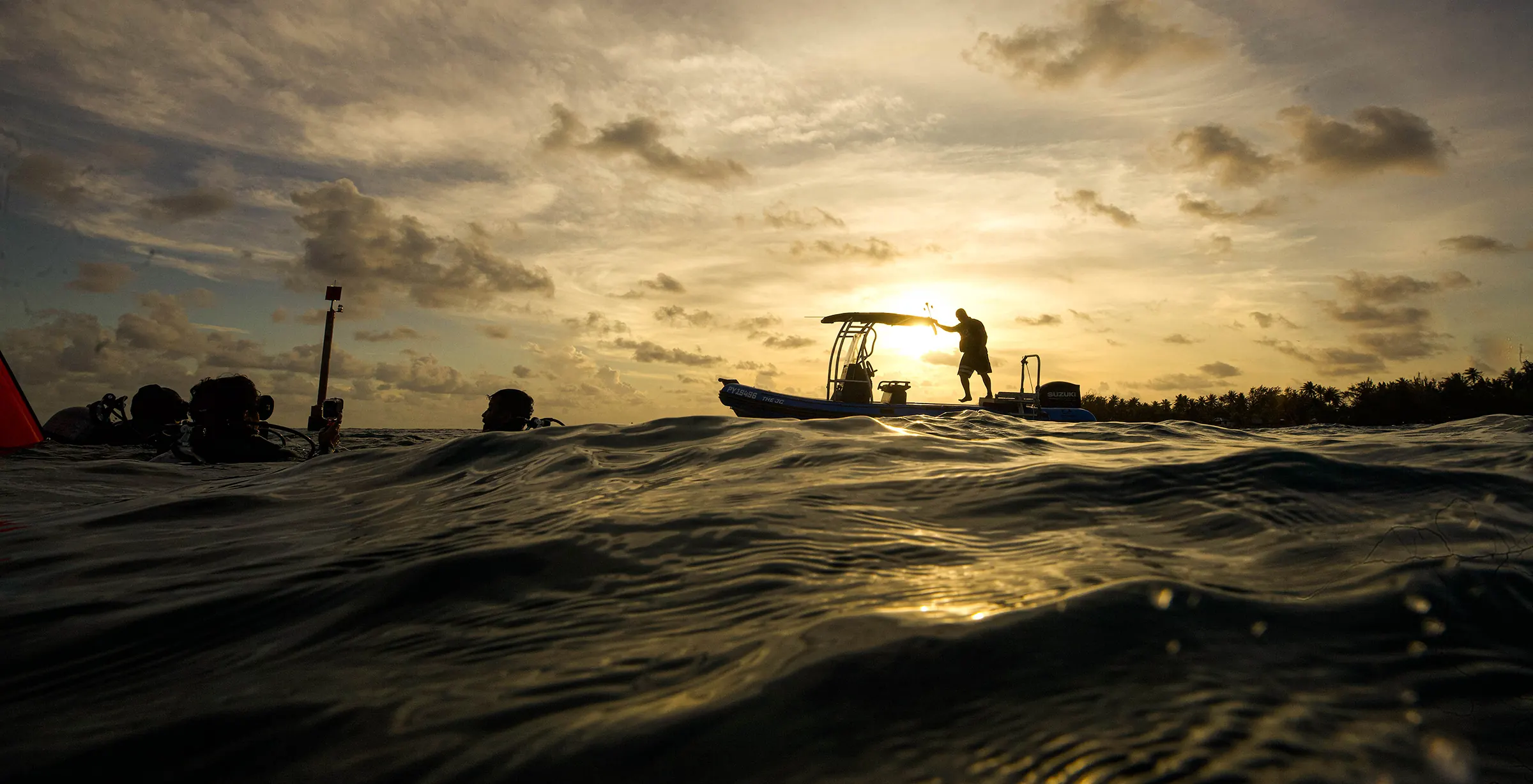
Research
Demographic monitoring
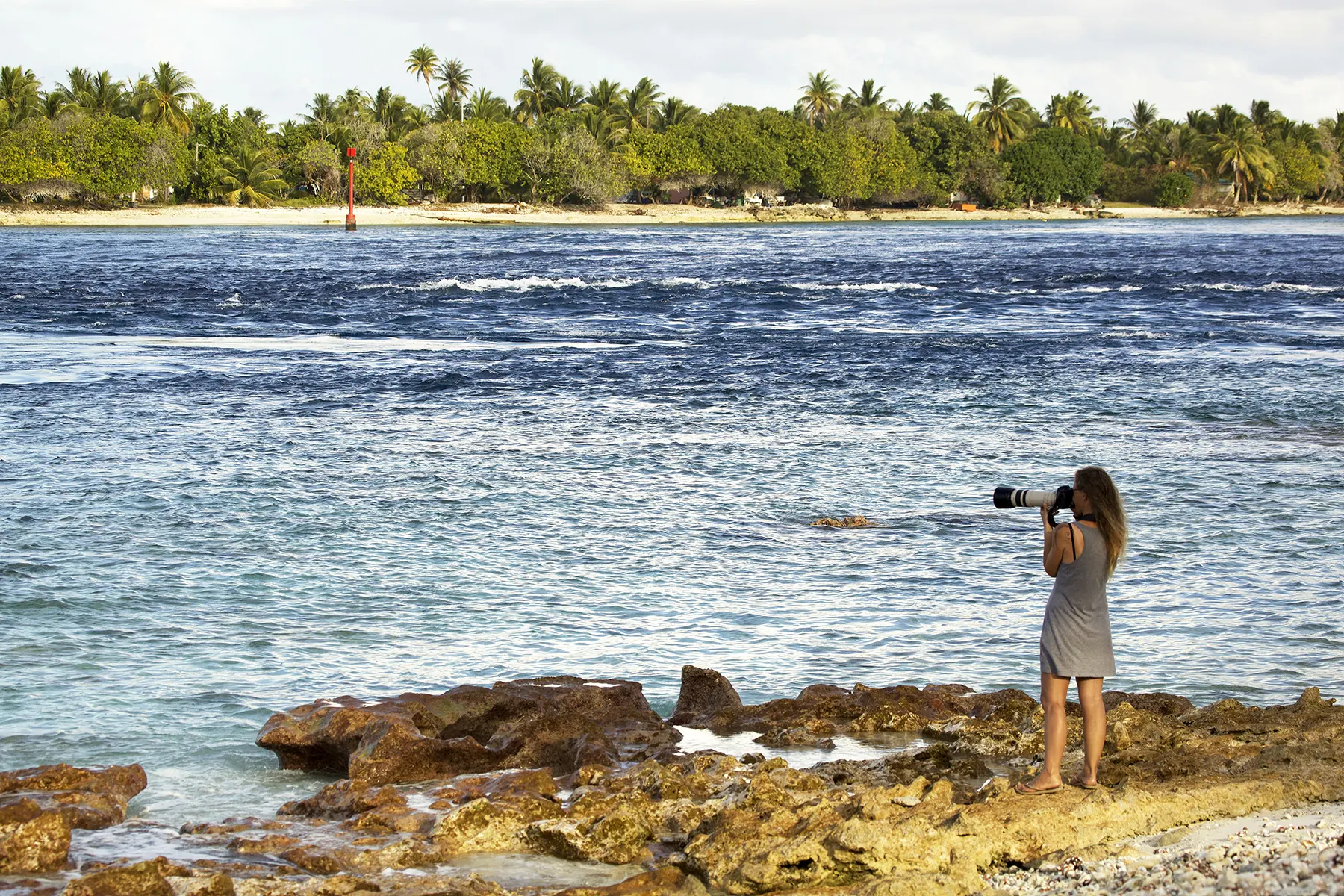
Several times a month, we collect photographic data from land, near Hiria Pass where the dolphins come to surf and leap every day. This data allows us to answer many questions: how many dolphins are there? Are they always the same individuals? Which females are pregnant? How are the newborns doing? This work has in particular allowed us to observe a notable decline in the number of individuals frequenting the Tiputa area: between 2009 and 2026, the community lost a third of its dolphins. For this part of our work, we benefit from the support of Les Relais de Joséphine.
Behavioural monitoring
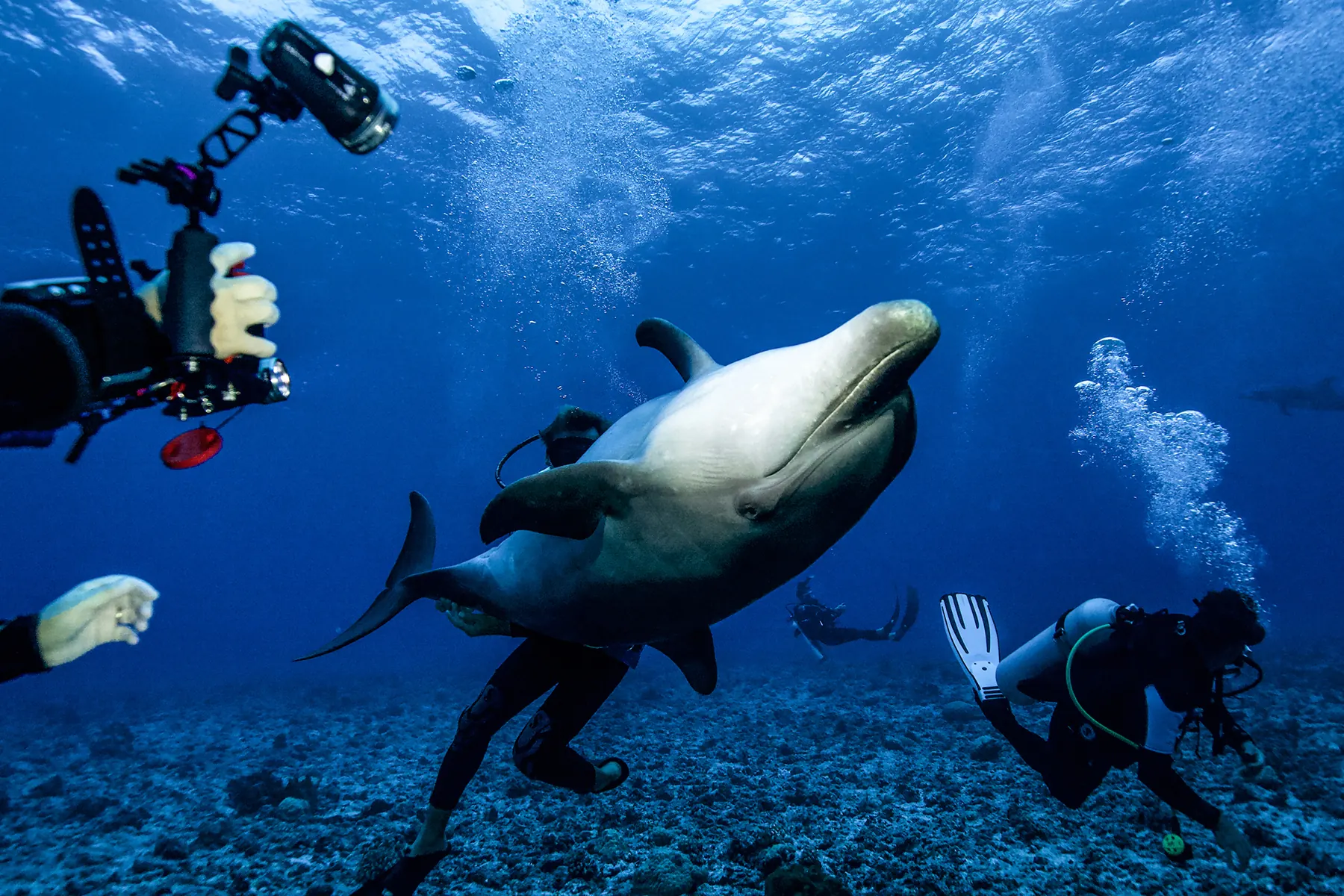
Behavioral monitoring takes place while scuba diving. The observations, photos and videos we collect allow us to detail certain demographic parameters, but above all to observe how dolphin behavior evolves in relation to their interactions with dive tourism activities. In particular, we are able to answer the following questions: how often is each dolphin observed, and how does it behave in the presence of scuba divers? How do divers behave toward the dolphins? What risks are associated with interactions between dolphins and divers?
Based on this knowledge, we issue recommendations for better management of tourism activities focused on dolphin watching. For this fieldwork, we are supported by the Rangiroa Diving Center.
The impacts of tourism
Whale and dolphin watching activities promising unique encounters with free-ranging cetaceans are increasing dramatically worldwide. The great sociability and pseudo smile of bottlenose dolphins, Tursiops spp., which embody the human view of dolphins, indeed favor a perception of these animals closer to myth and romanticism than reality.
However, numerous studies conducted over the past 40 years in Australia, New Zealand, North and South America, and Europe show that these activities can have deleterious effects on cetaceans and may be risky for their admirers. In French Polynesia, recreational and commercial whale and dolphin watching has the potential to disturb and sometimes harm such marine mammals as the humpback whale (Megaptera novaeangliae), common bottlenose dolphin (Tursiops truncatus), and spinner dolphin (Stenella longirostris).
This so-called ecotourism was primarily sold to officials and the public based on two benefits: to enjoy the beauty of cetaceans in their natural settings and to educate people about their vulnerability. Yet, current trends show that these benefits are often out-weighed by adverse consequences on the animals' welfare and fitness.